What Is a Listing Agent? What They Owe You in Texas

A listing agent is the licensed real estate agent who represents the seller in a home sale. The title comes from the document that creates the relationship: a written listing agreement, which is what turns a friendly agent into a fiduciary who owes you specific, enforceable duties.
That distinction matters more than the job title. Every agent will tell you what they do. The listing agreement is what they are actually obligated to do, and the two are not always the same document.
Most articles on this question stop at the definition. Here is the definition, then the four contract terms that decide how much leverage you keep, what the listing side really costs on a Fort Worth home, and where the standard version of this role and mine part company.
How the numbers in this guide work. Every dollar example is anchored to Fort Worth’s $319,999 median sale price for May 2026, along with the 29 median days on market and the 95.0% sale-to-list ratio, all from my market report. Commission percentages are the Texas market averages cited in my real estate commission breakdown, not a published rate, because no published rate exists. Every percentage below names what it is measured against.
The Duties, Not the Marketing
In Texas, agents are licensed by the Texas Real Estate Commission, and a listing agent works under a sponsoring broker. Mine is John Hill at Close Real Estate in Fort Worth. The listing agreement is between you and that brokerage, not you and the individual, which is worth knowing before a personnel change surprises you mid-listing.
Once the agreement is signed, six duties attach:
Loyalty. Your interests come before the agent’s own, including their interest in closing fast to get paid.
Obedience. Lawful instructions get followed. If you say no showings before 10am, that is the rule.
Disclosure. Anything material to your decision gets told to you, including the things you would rather not hear about your price.
Confidentiality. Your motivation, your bottom line, and your timeline stay with the agent, during the listing and after it ends.
Accounting. Every dollar that moves through the transaction is documented.
Reasonable care. Competence, not just effort. An agent who prices a house on aspiration has not met this one no matter how hard they worked.
Texas layers a disclosure requirement on top. At the first substantive communication about a property, an agent must give you the Information About Brokerage Services form, which explains who the broker represents. It is a one-page form, it is required, and if nobody handed it to you, that is a signal about how the rest of the file will be handled.
What the Work Actually Consists Of
Stripped of adjectives, the listing side of a transaction is nine jobs:
| Job | What it decides |
|---|---|
| Comparative market analysis | The list price, which is the single biggest variable in the outcome |
| Pre-listing prep and repair triage | Which repairs return more than they cost, and which are wasted money |
| Photography and marketing | Whether the listing gets clicked in the first 72 hours |
| MLS entry and syndication | Where the listing appears and how accurately it is described |
| Showing coordination | Access, feedback capture, and security |
| Offer evaluation | Net proceeds, not headline price, across competing offers |
| Inspection and repair negotiation | The second negotiation, which sellers routinely lose |
| Appraisal support | Whether a low appraisal kills the deal or gets reconsidered |
| File management to closing | Title, survey, HOA documents, funding |
Two of those nine carry most of the money. Pricing sets your ceiling on day one, and the inspection negotiation is where a deal that looked won quietly gives back $8,000. About 12% of Fort Worth listings take a price cut before they sell, which is almost always day-one pricing catching up with the seller, and a house that reprices publicly loses negotiating position it does not get back.
Listing Agent, Selling Agent, Seller’s Agent, Realtor
The vocabulary is genuinely confusing, and it is confusing in a way that costs sellers money when they assume the wrong person is on their side.
Listing agent and seller’s agent are the same role. Both represent you.
Selling agent is the agent who brought the buyer. The name describes who sold the house, not who is selling it. Most Texas agents now say buyer’s agent for exactly this reason.
Realtor is not a role at all. It is a membership designation for agents who belong to the National Association of Realtors and agree to its code of ethics. Every Realtor is a licensed agent; not every licensed agent is a Realtor. It says something about accountability and nothing about skill.
Dual agency does not exist in Texas the way it does elsewhere. What Texas permits is an intermediary: one broker representing both sides, with written consent, and with sharply limited ability to advocate. If your listing agent’s own buyer writes an offer, you need to understand that structure before you agree to it, not after.
The Four Terms Worth Reading Twice
The standard Texas form is an exclusive-right-to-sell listing agreement, which means the brokerage earns its commission if the home sells during the term no matter who found the buyer. That structure is normal and it is not the problem. These four terms are where sellers get stuck:
The commission rate. A contract term, negotiable before signing and fixed after. The listing side averages 2.8% to 2.925% of the sale price, roughly $8,960 to $9,360 on the Fort Worth median. Half a point is real money; on a $450,000 home it is $2,250.
The term length. Six months is the common default. Ask what happens if the relationship stops working in week three, and get the answer in writing.
The protection period. After the agreement ends, the broker stays entitled to commission for a defined window if the buyer was introduced during the listing. This clause is legitimate and it exists to prevent an obvious end-run. Know the length anyway.
The cancellation terms. Ask directly: can I end this today, in writing, at no cost? A great many sellers assume the answer is yes and discover in month four that it is not.
There is a fifth thing that is not a clause: what the agent pays for. Two listing agreements at identical rates can differ by $10,000 in what comes out of your pocket before the sign goes up, and that difference never appears in the commission line.
Where My Version Differs
I built my seller services around the three complaints I heard most often from sellers who had done this before, and each one is now a written commitment, not a promise.
The prep is on me. Card 4 of my written guarantees: cleaning, repairs, yard work, and staging. I pay for the prep before your listing goes live, so you write zero checks before the sign goes up. That includes the roughly $600 pre-listing inspection, which is the item most sellers skip and most regret, because it converts the buyer’s inspection from an ambush into a document you have already read.
There is no lock-in. No exclusive listing with a lock-in clause. Send me a text and the representation ends that day. I am aware that removes my leverage; that is the point. An agent who needs a six-month contract to keep you is telling you something.
The timeline is guaranteed in writing. A written timeline target for sellers. Miss it and I pay the gap out of my commission at closing. And if I am late, dishonest, or drop a ball on any commitment along the way, I send you $100 on the spot.
The financial argument for covered prep is not sentimental, it is arithmetic. Sellers who skip prep and list as-is typically give up 5% to 15% against what the same house would fetch prepped. On the Fort Worth median that is $16,000 to $48,000 to avoid a prep bill that runs a small fraction of it. When the prep costs the seller nothing, the decision stops being a decision.
How to Vet One in Fort Worth
Four checks, in order of how much they tell you:
Verify the license yourself. TREC’s license search shows status, sponsoring broker, and any disciplinary history, for me and for anyone else you are considering. It takes a minute and almost nobody does it.
Ask for transaction count, then ask for proof. I have closed 300-plus transactions, 102 of them independently verified. The verified number is the only one that means anything.
Call past clients. I publish past client phone numbers so you can call before you commit, and ask them whatever you want. An agent who will not connect you with recent sellers is answering the question by declining it.
Get the net sheet before the pitch. A listing agent who cannot show you your estimated proceeds after Texas seller closing costs in the first conversation is not ready to price your house. Total seller costs run about 6% to 9% of the sale price, commission included, and you should see that number before you sign anything.
Market conditions change what you should ask for, too. Whether Fort Worth is currently a buyer’s market shapes how aggressively you can price and how much prep you need to compete, and any listing agent should be able to tell you where the metro sits this month without looking it up.
Get the Net Sheet Before You Sign Anything
The role is simple to define and easy to shop badly. Rate is the number sellers compare and the least useful one, because it says nothing about who funds the prep, how long you are committed, or what happens when the agent underperforms.
Book a free 10-minute Initial Consultation and I will price your house against real comparable sales, show you the net sheet, and walk you through the listing agreement line by line before you commit to a thing. If the ten minutes waste your time, I send you $100.
Then go read the Fort Worth seller’s guide for how the process runs from pre-inspection to closing day, so you know what you are hiring someone to run.
Frequently Asked Questions
What is the difference between a listing agent and a selling agent?
A listing agent represents the seller and markets the home. A selling agent, confusingly, is the agent who brings the buyer, so the name describes who sold the house, not who is selling it. Most Texas agents now say buyer's agent instead, precisely because selling agent gets misread in both directions.
What does a listing agent actually do for the commission?
Pricing from real comparable sales, pre-listing prep and repair triage, photography and marketing, MLS entry and syndication, showing coordination, offer evaluation and negotiation, inspection and repair negotiation, appraisal support, and managing the file through title to closing. The pricing and the two negotiations are where most of the money is won or lost.
How much does a listing agent cost in Texas?
The listing side typically runs 2.8% to 2.925% of the sale price, part of a total commission averaging 5.6% to 5.85%. On Fort Worth's $319,999 median that is roughly $8,960 to $9,360 for the listing side. No Texas law sets the rate and federal antitrust law prohibits agents from agreeing on one, so every quoted figure is a market average.
Can I fire my listing agent in Texas?
It depends entirely on what you signed. A standard exclusive-right-to-sell agreement runs for a set term, commonly six months, and cancellation is at the broker's discretion unless the agreement says otherwise. Ask before you sign whether you can end it in writing at any time with no fee, and get the answer in the document, not in conversation.
Do I need a listing agent to sell my house in Texas?
No. Texas allows owners to sell without representation, and flat-fee MLS services will put your home in the system for a few hundred dollars. What you take on is pricing, prep, disclosure, showings, and both negotiations. That trade works for sellers who have done it before and have the time, and it usually costs more than it saves for sellers who have not.
What is the protection period in a Texas listing agreement?
It is a clause that keeps the broker entitled to commission for a defined window after the agreement ends, if the buyer is someone who was introduced to the property during the listing. It exists to stop a buyer and seller from waiting out the contract to cut the agent out. It is legitimate, and you should still know its length before you sign.
Related Articles
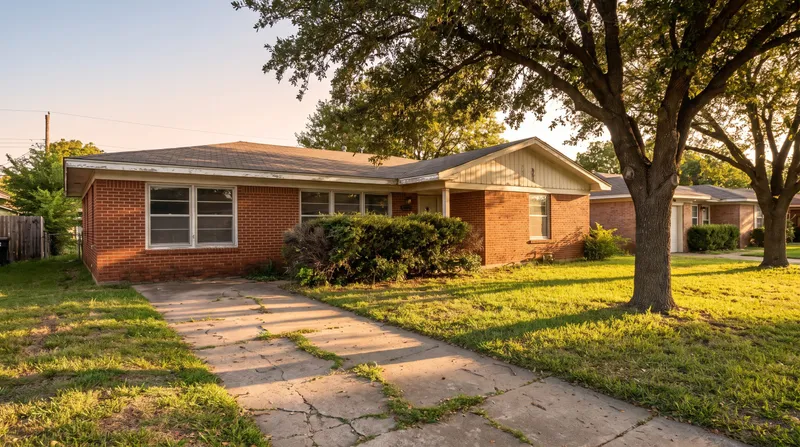
Selling a House As Is in Texas: What It Actually Costs
As-is means two different transactions in Texas, and only one costs you 15%. The arithmetic on the Fort Worth median, and what the law still requires.

The Complete Guide to Closing Costs for Sellers in Texas
Discover closing costs for sellers in Texas. Learn what fees to expect, how to save money, and get expert tips. Book your free consultation today!

How Much Are Seller Closing Costs in Texas? Your 2026 Guide
Discover how much are seller closing costs in Texas for 2026. Get a detailed breakdown, local tips, and learn how to save. Book your free consultation!