How Much Are Seller Closing Costs in Texas? Your 2026 Guide
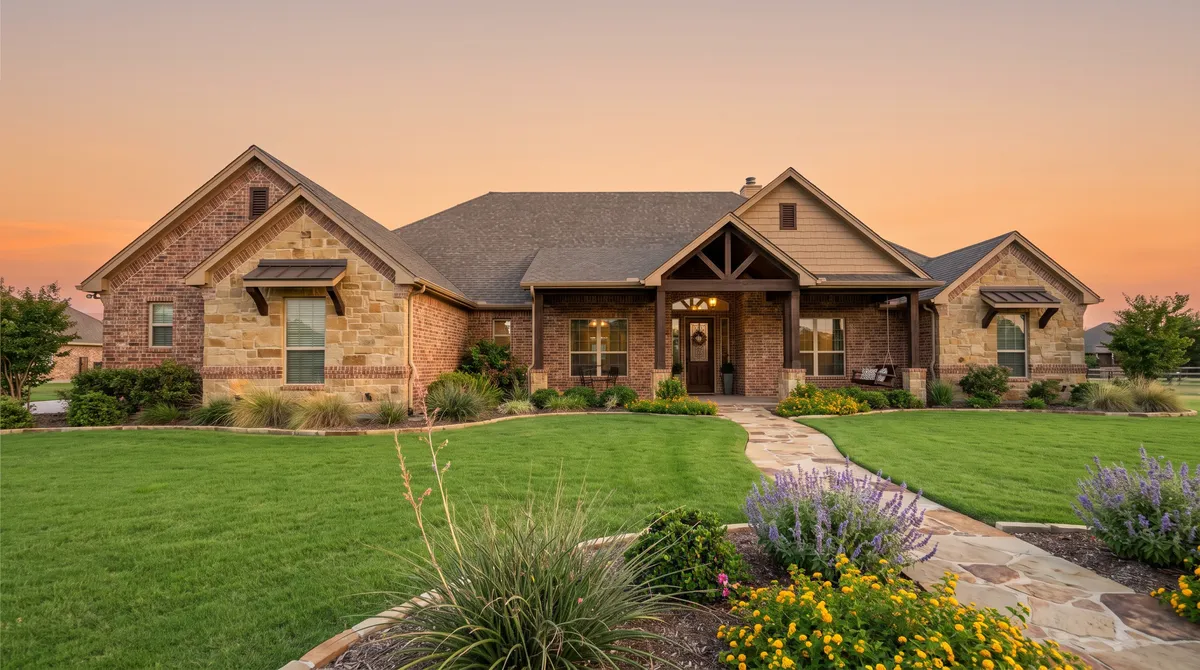
When you sell your Texas home, expect total costs to land around 6% to 9% of your sale price. That includes commission, but the non-commission closing costs typically run 1% to 3%. Texas has its own customs that can swing your final number by thousands of dollars.
The Lone Star State requires sellers to pay for specific items like the owner’s title policy, tax prorations, and HOA transfer fees that other states handle differently. Knowing how much are seller closing costs in Texas helps you budget accurately and spot opportunities to trim expenses without hurting your sale price. You’ll get the clearest picture of your net proceeds with a custom breakdown that factors in your specific situation and local market conditions.
Ready to see exactly what you’ll walk away with? Conner Nielsen provides a detailed net sheet during your free Initial Consultation, and if you want proof I deliver what I promise, just call my past clients and ask them yourself.
What Fees Are Included in Texas Seller Closing Costs? The Real Breakdown
Let’s break down what fees are included in seller closing costs in Texas. The costs split into two main buckets: commission and everything else. Commission takes the biggest bite, but those other expenses add up fast and follow Texas customs that might catch you off guard.
Commission Is Your Biggest Cost
Real estate commission typically runs 5% to 6% of your sale price and represents your largest single expense. On a $400,000 home, that’s $20,000 to $24,000 right off the top. On a $650,000 home, you’re looking at $32,500 to $39,000. The non-commission closing expenses usually total 1% to 3% of your sale price, adding another $4,000 to $12,000 on the $400,000 home or $6,500 to $19,500 on the $650,000 property.
Texas Custom: Sellers Pay for Owner’s Title Coverage
Here’s where Texas differs from many states. Sellers typically pay for the owner’s title policy, though you can negotiate this with your buyer. The title insurance premium is regulated by the state and includes your title search, examination, and closing services all rolled into one fee. This streamlined approach means you won’t see separate line items for title work like you might in other states.
Beyond Commission and Title Coverage, Budget for These Extras
Property tax prorations, HOA transfer and resale certificates, survey or T-47 affidavit, recording fees, document preparation, and potential home warranty coverage round out your expenses. HOA communities often charge $200 to $500 for transfer fees and resale certificates. Survey requirements depend on your lender and property. You might pay $25 to $50 for a T-47 affidavit or $400 to $800 for a full survey. These variable closing charges can sometimes be shopped around or negotiated. Getting a paid pre-inspection upfront helps you avoid surprise repair credits that can blow up your closing costs at the last minute.
Typical Texas Seller Line Items and Ranges (2026)
Let’s break down exactly what you’ll pay as a Texas seller. These numbers are based on what I’m seeing in today’s market across Dallas, Fort Worth, and Ellis County, though your actual costs depend on your home’s price, location, and negotiations.
| Item | Who Typically Pays in TX | Typical Range/Notes | Negotiable? |
|---|---|---|---|
| Real Estate Commission | Seller | 5-6% of sale price ($20,000-$24,000 on $400k home) | Yes, but affects service |
| Owner’s Title Policy | Seller | $800-$2,500+ (based on sale price) | Yes, can shift to buyer |
| Escrow/Closing Fee | Split or negotiated | $400-$800 total | Yes |
| HOA Transfer/Resale | Seller | $200-$500 (varies by community) | Capped by law |
| Survey or T-47 | Seller or buyer | $400-$800 (survey) or $25-$50 (T-47) | Yes |
| Taxes (Proration) | Prorated by ownership | Varies by closing date | No |
| Recording/Doc Prep | Split or per agreement | $100-$300 total | Yes |
| Home Warranty | Negotiated | $400-$600 if provided | Yes, optional |
| Payoff/Reconveyance | Seller | $150-$400 per loan | No |
| Concessions/Repairs | Negotiated | $0-$5,000+ (market dependent) | Yes |
The owner’s title policy protects the buyer’s ownership rights and is typically a seller expense in Texas, though this can be negotiated. For HOA communities, resale certificate and transfer fees are set by your association and typically run $200 to $500, with master-planned neighborhoods landing at the higher end of that range.
Smart sellers, request written fee quotes from title companies and settlement agents early in the process to avoid surprises at closing. This Texas seller closing cost breakdown gives you the big picture, but every situation is different. Ready to see your exact numbers? Book a consultation to get a personalized net sheet based on your home and timeline.
Are Costs Different in Dallas, Fort Worth, and Ellis County? What to Expect
So are seller closing costs different in Dallas, Fort Worth, and Ellis County? The good news is that most closing costs stay consistent across North Texas. Title insurance premiums are state-regulated, so you’ll pay the same rate whether you’re selling in downtown Dallas or a quiet Ellis County neighborhood. The differences come down to local customs, HOA requirements, and how smart you are about shopping settlement services.
-
Title policy rates are identical statewide - The premium you pay for owner’s title insurance is set by Texas law, but you can negotiate who covers it and shop around for the best settlement/escrow fees from different title companies.
-
HOA-heavy suburbs bring extra fees - Master-planned communities in Frisco, Plano, or DeSoto often charge $200-$500 for transfer certificates and resale packages, while older neighborhoods without HOAs skip these entirely.
-
MUD and PID districts add paperwork, not costs - Many DFW suburbs have Municipal Utility Districts that require extra disclosures and notices, which can slow your timeline but don’t typically change your bottom-line costs.
-
Settlement fee shopping saves real money - While title premiums are fixed, closing/escrow fees vary widely between companies. I’ve seen $300 differences on the same transaction just by making three phone calls.
-
Real numbers matter - On a $400,000 sale, expect $3,000-$8,000 in non-commission costs; on a $650,000 sale, plan for $5,000-$12,000. Smart negotiation and service shopping can easily trim $1,000-$3,000 from these totals.
-
Local expertise pays off - That’s exactly why I focus exclusively on Dallas, Fort Worth, and Ellis County and back it up with guarantees like a paid home inspection (~$600 value) and earnest money protection. I know which title companies offer the best rates, how to navigate HOA requirements in your specific area, and I’ll put my own money on the line if I don’t deliver.
How Can Texas Home Sellers Reduce Closing Costs in 2026?
For busy families juggling work and kids, every closing cost dollar matters when you’re already stretching to buy your next home. Smart Texas sellers know that how home sellers can reduce closing costs in Texas comes down to three moves: shop early, prepare smart, and work with someone who covers the big-ticket items upfront. With closing costs often reaching $15,000 to $25,000 on a typical DFW sale, every dollar you save stays in your pocket for the new house.
Shop Title and Settlement Services Early
The state sets title insurance premiums, but according to the Texas Department of Insurance, you can still shop settlement fees and negotiate payment responsibility. Many sellers don’t realize they can ask about discounts if the property had recent title insurance. The Texas Department allows credits within specific windows, and settlement companies charge different fees for escrow, recording, and document prep. If I’m ever late helping you shop these services, that’s $100 on the spot.
Use Pre-Listing Inspections to Avoid Closing Surprises
Getting your own inspection before listing prevents buyers from discovering expensive issues during their inspection period. This strategy lets you fix problems once on your timeline rather than negotiate credits twice under pressure. A $600 inspection can save thousands in last-minute concessions or lost deals when buyers walk away over repair disputes. I cover this inspection cost upfront, so there’s no cash out of your pocket.
Leverage Services That Lower Your Cash Outlay
The smartest move is working with someone who covers major prep costs upfront. When your listing agent pays for the pre-inspection, handles all cleaning and repairs, covers staging, and throws in a $500 moving credit, you’re looking at $2,000 to $4,000 in immediate savings. Plus, with a cancel-anytime agreement, you’re never stuck paying for underperforming services. I back this with my earnest money guarantee too.
Bottom Line and Next Step: Know Your Net, Not Just Your Price
Planning for seller closing costs texas 2026 means budgeting 6% to 9% of your sale price for total costs, with non-commission items typically running 1% to 3%. The exact mix depends on your home’s price, HOA requirements, tax prorations, and what you negotiate with buyers. Since title insurance rates are regulated statewide, the main differences come from settlement fees, HOA transfers, and closing concessions.
Beyond the numbers, smart sellers focus on their net proceeds, not just the listing price. When you work with an agent who covers your home sale prep, handles all prep work, and backs everything with performance guarantees, you keep more money in your pocket while reducing stress. You get clarity on exactly what you’ll walk away with before you commit to anything.
Ready to see your custom net sheet and timeline? Conner Nielsen will walk you through the numbers in a free 10-minute consultation.
Frequently Asked Questions
Do sellers have to pay the owner's title policy in Texas, or can buyers cover it?
Texas custom is for sellers to pay the owner's title policy, but it's negotiable. The Texas Department of Insurance sets premium rates, but contract terms decide who pays. In competitive markets, sellers often cover it to strengthen their position.
What's the difference between closing/escrow fees and the title insurance premium?
The title insurance premium protects against ownership defects and follows state-regulated rates. Closing fees cover the settlement company's administrative work like document prep, notary services, and wire transfers. These are separate line items with different pricing structures.
How much do tax prorations typically cost Texas sellers?
Tax prorations split the annual property tax bill between seller and buyer based on the closing date. If you close mid-year, you'll owe the buyer money to cover the taxes for the months they'll own the home. The amount depends on your tax bill and timing.
What are HOA transfer and resale certificate fees?
Many Texas neighborhoods require HOA resale certificates and transfer fees when ownership changes. Master-planned communities typically charge $200-500 for these documents. The HOA sets these fees, and they're typically non-negotiable but should be factored into your net calculation.
How do new survey requirements affect seller costs in 2026?
Recent TREC form changes updated T-47 affidavit rules. Most sellers can still use the T-47 instead of ordering a new survey, saving $400-800. I'll verify eligibility based on your property's specific situation and any boundary concerns.
Related Articles
What Is a Listing Agent? What They Owe You in Texas
A listing agent represents the seller. What the role covers in Texas, what the listing side costs, and the four contract terms worth reading twice.
Selling a House As Is in Texas: What It Actually Costs
As-is means two different transactions in Texas, and only one costs you 15%. The arithmetic on the Fort Worth median, and what the law still requires.
The Complete Guide to Closing Costs for Sellers in Texas
Discover closing costs for sellers in Texas. Learn what fees to expect, how to save money, and get expert tips. Book your free consultation today!