How Much Does a Home Inspection Cost in Fort Worth?
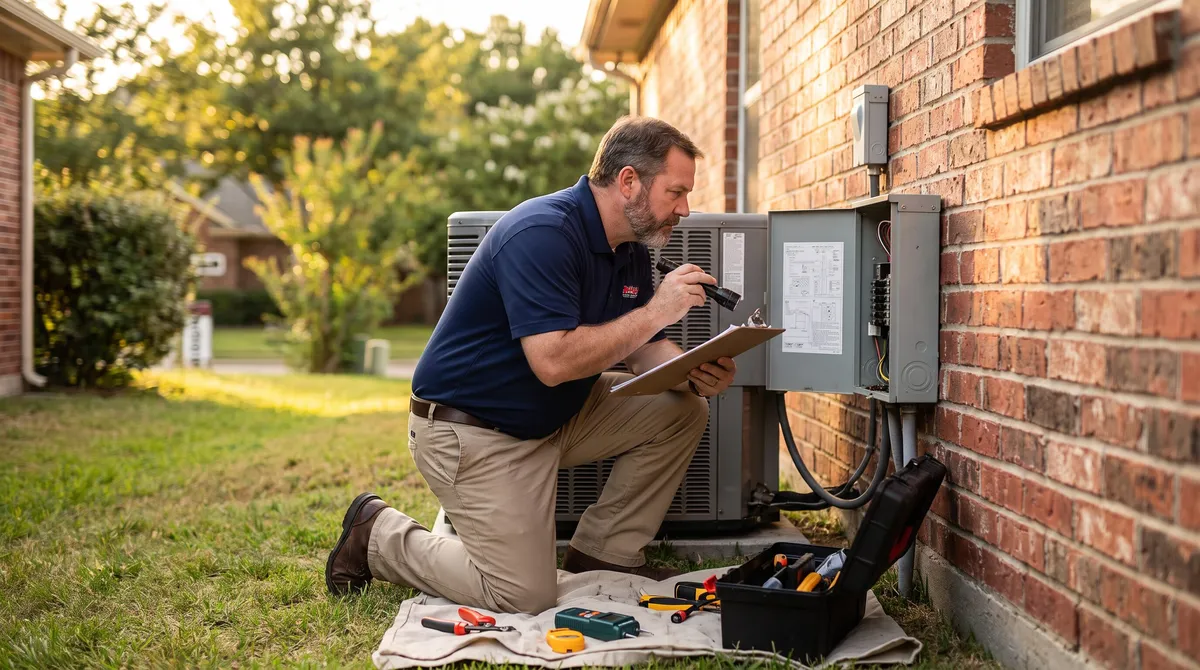
A standard home inspection in Fort Worth costs $280 to $640, and square footage sets almost all of it. A 2,000-to-4,000-square-foot house, which is most of what first-time buyers look at here, runs $390 to $500. That is the whole answer to the headline question. The more useful question is what turns a $445 inspection into an $835-to-$1,065 bill, and whether the extra spend is worth it on the specific house you are looking at.
Inspection pricing tracks square footage, age, and add-on services. It does not track home value, which surprises people. Inspecting a $600,000 house and a $300,000 house of identical size costs about the same, because the inspector is walking the same roof and opening the same panel.
Here is what you should expect to pay, what is worth adding in this market specifically, and how the timing works against the Texas option period. Most of the people I walk through this are first-time buyers, so nothing below assumes you have done it before.
How the numbers in this guide work. Every cost is a Fort Worth figure and is given as a range, because inspectors price off square footage, age, and add-ons rather than a fixed schedule. Where a single worked example is needed below, it uses $445, the midpoint of the $390-to-$500 band that covers most single-family homes here.
Base Cost by Home Size
| Home size | Typical cost |
|---|---|
| Under 2,000 sq ft | $280 to $390 |
| 2,000 to 4,000 sq ft | $390 to $500 |
| Over 4,000 sq ft | $500 to $640 |
Those bands come from Fort Worth inspection pricing data, and inspectors commonly add $50 to $100 for each additional 1,000 square feet past their base tier. Age moves the number too. A 1955 home in Fairmount takes longer to inspect than a 2018 build in Walsh Ranch, and pricing reflects that.
The Add-Ons, and Which Ones Matter Here
This is where a $445 base fee becomes $835 to $1,065. Not every add-on is worth buying, but several are close to mandatory in Fort Worth.
| Service | Typical cost | When to buy it |
|---|---|---|
| Termite / wood-destroying insect | $120 to $170 | Nearly always. Standard in North Texas. |
| Sewer scope | $170 to $250 | Any home built before about 1980. Cast iron fails here. |
| Foundation elevation survey | $150 to $400 | If the general inspector notes movement. |
| Pool and spa | $100 to $200 | Any property with one. |
| Septic system | $200 to $400 | Rural Parker, Wise, and Johnson County properties. |
| Pier-and-beam crawlspace | Often included, sometimes $75 to $150 | Older central Fort Worth neighborhoods. |
The three most common add-ons are the termite report, the sewer scope, and the pool inspection, and together they run $390 to $620. Buy all three on a mid-size home and your $445 base fee lands between $835 and $1,065.
Three of those services deserve a note, because they map to how houses actually fail in this part of Texas.
Foundations. North Texas sits on expansive clay that swells in wet seasons and shrinks in drought. Slabs move. Some movement is normal and cosmetic; some is structural and expensive. A general inspector will flag symptoms, such as door frames out of square or stair-step cracking in brick, but the general inspection is visual and does not measure anything. If those symptoms show up, the elevation survey is the cheapest clarity you will ever buy. Fort Worth foundation repairs average about $4,800 and run from roughly $2,200 for a minor lift to $23,500 for extensive piering, and a $150-to-$400 survey is what tells you which end of that range you are looking at.
Roofs and hail. DFW takes serious hail. A roof can look intact from the ground and still be at the end of its insurable life. Ask the inspector for the roof’s estimated remaining life, and ask the seller whether an insurance claim was ever filed. This is also why homeowners insurance in this metro runs $4,000 to $4,500 a year on a typical home, well above the Texas statewide average of $3,506 in 2025 reported by the Texas Department of Insurance.
Cast iron sewer lines. Fort Worth’s older neighborhoods, meaning most of anything built before 1980, are full of cast iron drain lines that corrode from the inside. Nothing about this is visible during a standard inspection. A $170-to-$250 camera scope is the difference between knowing now and finding out later, when the partial replacements most older Fort Worth homes need run $8,000 to $18,000.
What a Texas Inspection Actually Covers
Every inspector in Texas is licensed by the Texas Real Estate Commission and required to report on the same standardized form, the REI 7-6. That standardization is genuinely useful to you as a buyer. Two inspectors on the same house produce reports you can compare section by section.
The form covers structural systems, the exterior, roofing, plumbing, electrical, heating and cooling, and built-in appliances. The inspector notes deficiencies and adds written comments for each one.
What it does not cover matters just as much. A standard inspection is visual and non-invasive. Nothing gets opened up, nothing behind a wall is examined, and the inspector does not price repairs, quote code compliance, or predict how long anything will last. A report listing forty deficiencies on a well-maintained house is normal. Reading one for the first time is alarming until you understand that the inspector’s job is to note everything, not to rank it. Your agent’s job is to tell you which five items actually matter.
Timing: The Option Period Runs the Clock
In Texas you buy an option period, a short window, commonly seven to ten days, during which you can terminate for any reason and get your earnest money back. The option fee itself usually runs $100 to $500 and is separate from your earnest money deposit.
Every part of the inspection process has to fit inside that window. Schedule the inspection the day your offer is accepted, not the day after you have thought about it. A realistic sequence:
- Day 1: Offer accepted, inspection booked
- Day 2 or 3: Inspection performed, two to four hours on site
- Day 3 or 4: Written report delivered
- Day 4 to 6: Contractor quotes on anything significant
- Before the option period expires: Negotiate repairs, request a credit, or terminate
Good inspectors in Fort Worth book out several days in the spring. Losing two days to scheduling can leave you deciding without contractor bids in hand, which means negotiating blind.
Attend the inspection if you possibly can. An hour walking the house with the inspector teaches you more about what you are buying than the entire written report, and you can ask the questions the report format does not answer.
Should You Ever Skip It?
No.
Buyers waive inspections when they think it makes their offer more competitive. In a market where Fort Worth homes are sitting 29 median days on market with active inventory up 18.4% against the same month last year, that pressure has largely lifted. There is very little reason to hand over your only diligence window to look aggressive on a house that has been listed three weeks.
Even in a genuinely hot market, there are better ways to strengthen an offer. Raise the earnest money. Shorten the option period slightly. Be flexible on the closing date. Every one of those signals commitment without blinding you to a $23,500 foundation problem.
What I Do About the Cost
The inspection is the one expense in a home purchase that buyers are most tempted to skip, and it is the one with the worst downside if they do. So I removed the decision.
I pay for the home inspection myself, roughly $600 on a typical Fort Worth home, buyer or seller. That is Card 1 of my thirteen written guarantees: buyer or seller, I pay for the home inspection out of my own pocket, and you see every issue before signing anything.
Two things follow from that. First, cost stops being a reason to skip the inspection or to hire the cheapest inspector on a search results page. Second, if we walk away because the inspection found something serious, you are out nothing. Your earnest money comes back, and the inspection was on me. I have had clients terminate after an inspector found a hidden roof issue and leave the deal without losing a dollar.
I cover the appraisal through the lender too, another $600 or so, and there is a $500 moving credit at closing. Buyers never pay me a commission. If I am ever late, dishonest, or drop a ball on a commitment, I send you $100 on the spot. And there is no lock-in agreement, so if you decide I am not the right fit, send a text and it ends that day.
If you are budgeting the whole purchase rather than just this one line, the full breakdown of buyer costs in Tarrant County covers what actually hits at closing, and getting pre-approved first tells you what price range these numbers apply to.
Have the Inspection Conversation Before You Write an Offer
The inspection is not paperwork. It is the only window you get to find out what you are actually buying, and it closes fast.
Book a free 10-minute Initial Consultation and we will talk through which inspectors I trust in Tarrant County, which add-ons the house you are considering actually needs, and how to structure the option period so you are negotiating with real information instead of a deadline. The inspection itself is on me, and if the call wastes your time I will send you $100.
If you would rather hear it from my past clients first, ask for the list. They publish their phone numbers.
Frequently Asked Questions
How much does a home inspection cost in Fort Worth, Texas?
Between $280 and $640, depending on size. Homes under 2,000 square feet run $280 to $390, homes from 2,000 to 4,000 square feet run $390 to $500, and anything over 4,000 square feet runs $500 to $640. Those are base fees before any add-on services.
Who pays for the home inspection, the buyer or the seller?
The buyer, in nearly every Texas transaction, and you pay the inspector directly at the time of service rather than at closing. That is standard practice everywhere. It is also the reason I cover it for my clients out of my own pocket, roughly $600 on a typical Fort Worth home, buyer or seller.
Is a home inspection required in Texas?
No. Texas law does not require one and lenders do not either, though an FHA or VA appraisal enforces separate minimum property standards that are not the same thing as an inspection. It is entirely optional, and it is also the only chance you get to find out what you are buying before the option period closes.
How long does a home inspection take in Fort Worth?
Two to four hours for a typical single-family home, with the written report usually delivered within 24 hours. Larger or older homes take longer. Attend if you can, because walking the property with the inspector tells you more than the report will.
What add-ons should I pay for in Fort Worth?
A termite and wood-destroying-insect report is close to standard here at $120 to $170. Add a sewer scope at $170 to $250 on anything built before 1980, a pool and spa inspection at $100 to $200 if there is one, and a foundation elevation survey at $150 to $400 if the general inspector flags movement. The common three together add $390 to $620.
What happens if the inspection finds problems?
You have three options inside the option period: ask the seller to repair, ask for a price reduction or closing-cost credit, or terminate and get your earnest money back. The option period exists exactly for this, which is why the inspection has to be scheduled in the first days after your offer is accepted.
Related Articles

What Credit Score Do You Need to Buy a House in Fort Worth?
580 for FHA, 620 for conventional. But 620 is the number that actually decides your Fort Worth purchase, and it has nothing to do with loan approval.

How to Get Pre-Approved for a Mortgage in Fort Worth
What pre-approval takes in Fort Worth: the documents, the credit and DTI thresholds, the 1-3 day timeline, and what your letter is actually worth in 2026.

How to Set Up Dallas, Fort Worth MLS Home Alerts
Set up Dallas, Fort Worth MLS home alerts for first-time buyers and get faster, accurate listings from the MLS. Book your free consultation today!