Closing Costs in Fort Worth, Texas: What Buyers Pay
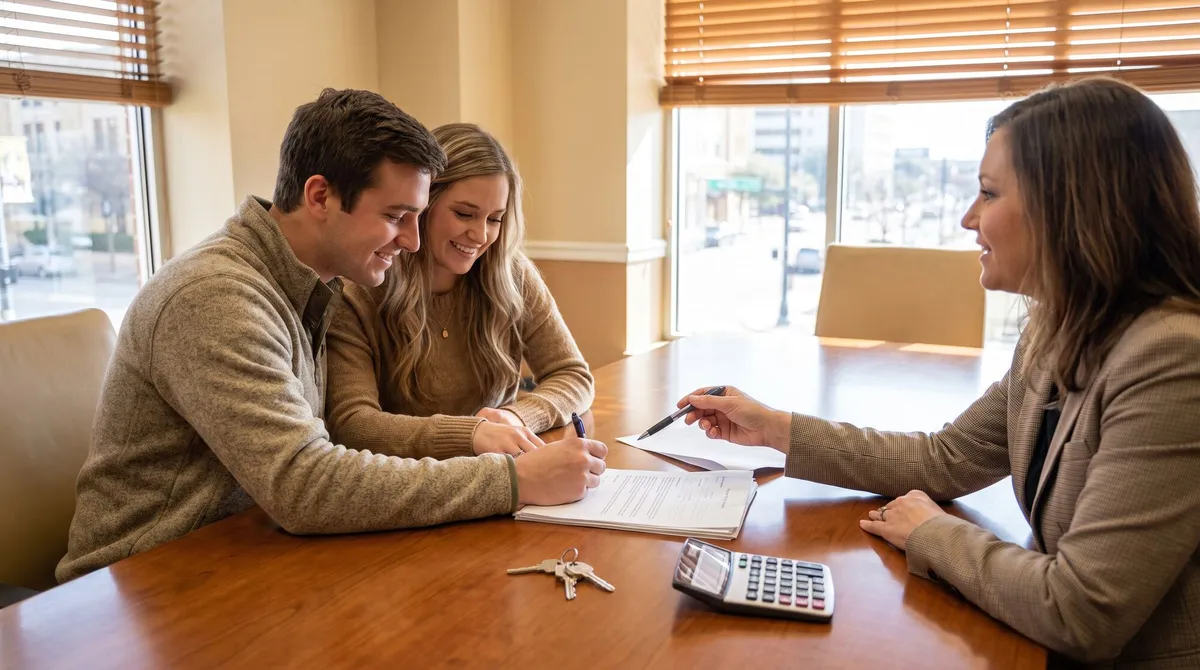
Buyer closing costs in Fort Worth run 3% to 5% of the purchase price. On the $319,999 median that is $8,000 to $17,000, and in practice most Fort Worth buyers I work with land between about $9,000 and $14,000.
That range is uselessly wide, and the reason is worth understanding before you read another line. Roughly two thirds of a typical closing-cost total is not fees. It is prepaid homeowners insurance, prepaid interest, and the reserve your lender collects to fund the property tax escrow, and all three are money you would owe anyway, just collected early. The actual fees, the ones a lender or title company charges for doing work, are the smaller half and the only half you can shop.
Here is every line item on the median, who pays what under Texas custom, and the four places the number genuinely bends.
How the numbers in this guide work. Every dollar example is anchored to Fort Worth’s $319,999 median sale price for May 2026, the figure in my market report, with 5% down on a conventional loan of $303,999. Mortgage math uses 6.69%, the 30-year average in early August 2026 per Freddie Mac. Property tax is stated at Tarrant County’s combined nominal rate of about 2.2% of assessed value, which in year one tracks your purchase price. Title premiums are set by the Texas Department of Insurance and are the same at every Texas title company. Insurance figures are DFW averages of $4,000 to $4,500 a year. Every percentage below names what it is measured against.
The Buyer’s Line Items, One at a Time
Split into the two halves that behave differently.
Fees and one-time charges
| Line item | Typical range | On the median |
|---|---|---|
| Loan origination, underwriting, processing | 0% to 1% of loan | $0 to $3,040 |
| Appraisal | $600 to $750 | $600 to $750 |
| Credit report, flood cert, tax service | $150 to $300 | $150 to $300 |
| Lender’s title policy (simultaneous issue) | flat | $100 |
| Title endorsements | $50 to $250 | $50 to $250 |
| Escrow and settlement fee (buyer’s share) | $350 to $650 | $350 to $650 |
| New survey, if the seller’s is not acceptable | $400 to $800 | $400 to $800 |
| County recording | $75 to $150 | $75 to $150 |
| Fees subtotal | $1,725 to $6,040 |
Prepaids and escrow reserves
| Line item | Basis | On the median |
|---|---|---|
| Prepaid interest | Days from closing to month end at $55.72/day | $0 to $1,672 |
| First-year homeowners insurance | DFW average | $4,000 to $4,500 |
| Property tax escrow reserve | 3 to 6 months at $587/month | $1,760 to $3,520 |
| Insurance escrow reserve | 2 to 3 months | $670 to $1,125 |
| Prepaids subtotal | $6,430 to $10,817 |
Two entries deserve a note.
Prepaid interest is a calendar artifact. At 6.69% on a $303,999 loan you accrue $55.72 a day. Close on the 28th and you owe two or three days of it. Close on the 2nd and you owe most of a month. Closing late in the month is worth up to about $1,600 and costs nothing to arrange, which makes it the cheapest thing on this page.
The tax escrow is not a fee and it is not lost. Texas property taxes are billed in arrears and due January 31 for the prior year, so the seller credits you for their share of the year up to closing. That credit lands on your side of the settlement statement and reduces what you bring. Your lender then collects a cushion on top so the escrow account can pay the full bill in January. Both things happen at once, which is why this line confuses people more than any other.
Add the halves and the full span is $8,000 to $17,000, or 3% to 5% of the price. The top of that stack assumes a full point of origination and a six-month tax reserve at the same time, which rarely happens together. Strip both extremes and a typical Fort Worth buyer lands between about $9,000 and $14,000, which is about 3% to 4.5% of the purchase price.
Your earnest money is not on either list. At the roughly 1% DFW norm, the $3,200 you already deposited is credited to you at closing, so it reduces the cash you wire instead of adding to the total. Your option fee may or may not be credited, depending on which box the contract checked.
Who Pays What in Texas
Texas has settled customs, and every one of them is a contract term you can negotiate.
| Line item | Customarily pays | Negotiable |
|---|---|---|
| Real estate commission | Seller | Yes |
| Owner’s title policy | Seller | Yes |
| Property taxes, January 1 to closing | Seller (as a credit to you) | No, it is arithmetic |
| HOA resale certificate and transfer fee | Seller | Yes |
| Existing survey and T-47 affidavit | Seller | Yes |
| Lender’s title policy and endorsements | Buyer | Rarely |
| Appraisal and all lender fees | Buyer | Shop, don’t negotiate |
| Escrow and settlement fee | Split | Yes |
| Recording | Buyer | No |
| All prepaids and escrow reserves | Buyer | No |
The seller-paid item that matters most to a buyer’s cash requirement is the concession. In the current Fort Worth market, with active inventory up 18.4% year over year and 12% of listings taking a price cut, asking a seller to contribute toward your closing costs is a normal request, not an insult. Whether it works depends on your segment, which my breakdown of the current buyer’s market goes through band by band.
One caution. A concession competes with your price. A seller weighing two offers looks at their net, so $8,000 toward your closing costs makes a $320,000 offer read as a $312,000 offer to them. That is a trade, not free money, and it is usually a good trade when cash at closing is your binding constraint.
The Texas Advantage Nobody Mentions
Texas charges no real estate transfer tax. Not at the state level, not at the county level, not at the city level.
In states that levy one, rates commonly run 0.1% to 2% of the sale price. On Fort Worth’s median that is $320 to $6,400 that a buyer somewhere else pays and you do not. All you owe on the transfer itself is county recording, which is $75 to $150.
That is a real advantage and it is roughly cancelled out by two Texas realities on the other side of the ledger. Property taxes here are high, at a combined nominal rate near 2.2% in Tarrant County, and DFW homeowners insurance runs $4,000 to $4,500 a year against a national average well under $3,000, largely because of hail. Since your first year of both is collected at closing, Texas keeps the transfer-tax saving and hands most of it back through the escrow lines. The property tax math is worth understanding before you set a budget, because it is the line that surprises out-of-state buyers most.
Reading Your Loan Estimate
Federal rules give you a Loan Estimate within three business days of applying, and a Closing Disclosure at least three business days before closing. Those two documents are how you verify everything above.
Page 2 is the page that matters. It sorts your costs into three tolerance categories, and the categories tell you which numbers are promises and which are guesses:
Zero tolerance. Lender fees and anything the lender did not let you shop for cannot increase at all. If origination moves, something is wrong.
10% cumulative tolerance. Services you can shop from the lender’s written provider list, plus recording fees, can rise by up to 10% in total.
No tolerance limit. Prepaid interest, insurance premiums, and escrow reserves can change freely, because they depend on your closing date and your insurer, not on the lender.
That third bucket is where nearly all the movement between your Loan Estimate and your final number comes from, and it is why a Loan Estimate that looked $2,000 cheaper can end up costing the same. Compare lenders on page 2’s first two buckets only. Comparing them on the total is comparing their guesses about your insurance premium.
Four Ways To Cut the Number
Ask for a seller concession. The largest single lever, and currently available on much of the Fort Worth inventory.
Take a lender credit. The lender pays some of your closing costs in exchange for a slightly higher rate. Run the break-even: if you plan to stay past roughly year seven, paying the costs up front usually wins. If cash is tight now, take the credit.
Stack down payment assistance. Fort Worth’s own program offers up to $25,000, and the state programs offer up to 5% of the loan, much of which can go to closing costs instead of down payment. My down payment assistance guide covers the eligibility and the rate trade-off, which is real and rarely disclosed.
Shop the shoppable and ignore the rest. Title premiums are state-set and identical everywhere in Texas, so shopping title companies on premium is wasted effort. The escrow and settlement fee is not state-set, and neither are lender fees. Those two are where the $500 to $1,500 of genuine variance sits.
Timing is the free one. Close on the 27th instead of the 2nd and prepaid interest does most of the work for you.
What I Cover, and What It Is Worth
Three of the line items above come off your side of the table when you work with me. Each one is a numbered card in my written guarantees, signed before you sign anything:
The inspection, at roughly $600. Buyer or seller, I pay for the home inspection out of my own pocket. It is not technically a closing cost, since you pay it during the option period, but it is cash out of the same account in the same month.
The appraisal, at $600 to $750. I coordinate it through the lender so you never write a check for it. Line two of the fee table, gone.
A $500 moving credit at closing. Applied at the closing table, so it directly reduces what you wire.
That is about $1,700 before commission. The larger number is commission: my buyer agreement specifies $0 buyer commission, and if the seller will not cover it, I absorb the difference myself. At the 2.925% buyer-side average that is roughly $9,360 on the Fort Worth median, and it is the one closing-cost risk the post-settlement market genuinely created for buyers. My full buyer representation page lays out how each of those lands in a real transaction.
Get Your Actual Number Before You Write an Offer
A percentage range is fine for orientation and no use for a decision. Your closing date, your lender, your insurer, and your segment move the total by thousands, and all four are knowable before you make an offer.
Book a free 10-minute Initial Consultation and I will build the real closing-cost estimate for the price point you are shopping, line by line, including what a seller in that band is realistically likely to contribute. If it wastes your time, I send you $100.
Before that call, get pre-approved so the lender fees on your side of the estimate are real numbers instead of averages. My mortgage pre-approval walkthrough covers the documents and the timeline.
Frequently Asked Questions
How much are closing costs in Texas for a buyer?
Buyers typically pay 3% to 5% of the purchase price. On Fort Worth's $319,999 median that is $8,000 to $17,000, and most buyers land between about $9,000 and $14,000. The spread comes almost entirely from prepaids: your closing date sets the prepaid interest, and your lender decides how many months of taxes and insurance to collect up front.
Who pays closing costs, the buyer or the seller, in Texas?
Both, on different items. Buyers pay lender fees, the appraisal, the lender's title policy, their share of escrow fees, recording, and all prepaids. Sellers customarily pay commission, the owner's title policy, and their share of the year's property taxes through the closing date. Almost every line is negotiable in the contract, and seller-paid buyer closing costs are a normal concession in the current Fort Worth market.
Does Texas have a real estate transfer tax?
No. Texas is one of a small group of states with no real estate transfer tax at any level, so nothing is owed on the transfer itself beyond nominal county recording fees of roughly $75 to $150. In states that do charge one, the rate commonly runs 0.1% to 2% of the sale price, which on Fort Worth's median would be $320 to $6,400.
How much is title insurance in Texas?
The basic premium is set by the Texas Department of Insurance, so it is identical at every title company in the state for a given policy amount. What differs is who pays it. Texas custom is that the seller pays the owner's policy, and the buyer's lender policy costs a flat $100 when issued at the same time under the state's simultaneous-issue rule. Endorsements and the escrow fee are extra and the escrow fee is shoppable.
Can closing costs be rolled into a mortgage?
Generally no, not as an addition to the loan on a purchase. What you can do is fund them another way: a seller concession written into the contract, a lender credit taken in exchange for a slightly higher rate, or down payment assistance that covers closing costs. FHA is the exception on one item, since the upfront mortgage insurance premium can be financed into the loan.
What is the difference between closing costs and a down payment?
The down payment is equity going into the house. Closing costs are the transaction expenses of getting it there: lender fees, title, recording, and prepaids. They are separate cash requirements and you need both at closing. Your earnest money already paid is credited against the total, so it is not an additional cost.
Related Articles
Down Payment Assistance in Texas: HAP, TSAHC, TDHCA
Texas down payment assistance is not free money. Most of it is priced into your interest rate. The real math on HAP, TSAHC, and My First Texas Home.

FHA vs. Conventional Loan in Texas: Which Is Better?
FHA or conventional in Texas? Compare 2026 down payments, credit minimums, MIP vs PMI, and Tarrant County loan limits with real Fort Worth payment math.
Real Estate Commission in Texas: Who Pays What in 2026
Real estate commission in Texas averages 5.6% to 5.85%. Who pays it after the NAR settlement, what is negotiable, and why my buyers pay $0 commission.